

Every game inside a Canadian online casino includes a built-in mathematical advantage for the operator looniegoldscasino.ca. That advantage represents the house edge, and understanding it changes how a player handles real-money play. It isn’t a hidden trick or a short‑term cheat. It is a long‑term statistical expectation that guarantees the casino stays profitable while still giving players a genuine chance to win. At Loonie Gold Casino, the entire game library functions on transparent house edge principles that reward informed decisions.
A lot of newcomers mistake the house edge with luck, but the two concepts are fundamentally different. Luck decides what happens in a single session or a handful of spins. The house edge explains what happens over millions of rounds. A player who grasps this distinction quits chasing losses and begins selecting games based on return‑to‑player percentages, volatility, and rule variations. The following sections explain exactly how the edge works across every major category available on the platform.
Casino Advantage Variations Across Table Offerings
Table games offer the broadest house edge spectrum of any casino category, and the particular rules at each table are highly important. Blackjack played with advantageous Canadian‑standard rules can have a house edge as small as 0.4% when the player uses perfect basic strategy. The identical game with a 6‑to‑5 blackjack payout in place of 3‑to‑2 increases to a 1.8% advantage. Rule variations on the identical game title can multiply the house advantage by a factor of 4, so reading the table conditions before taking a seat is crucial.
Roulette gives the most straightforward example of how a individual rule change alters the percentage. European roulette with a single zero has a 2.7% house edge on the majority of bets. American roulette introduces a double zero, increasing the edge to 5.26%. The added pocket does not alter the payout odds, so the casino simply collects a bigger mathematical portion. Canadian online casinos commonly provide both versions, and the European version is always the better choice for players who want to lengthen their bankroll.
Baccarat lies in a stable middle ground. The banker bet features a 1.06% house edge after deduction, while the player bet stands at 1.24%. The tie bet, notwithstanding its attractive 8‑to‑1 payout, carries a crushing 14.36% edge in many standard variants. Craps offers a analogous variety. The pass line bet has a 1.41% advantage, while some proposition bets in the centre of the table go above 10%. The best table game players learn which bets to avoid completely.
Licensing, Fairness Audits, and What This Means for the Edge
A casino’s licensing jurisdiction directly affects whether the stated house edge can be believed. Reputable regulators mandate that every game go through certification by an independent testing laboratory. These labs run millions of rounds and check that the real RTP matches the theoretical figure within an agreed statistical margin. When a Canadian player sees a 96.5% RTP on a slot at a properly licensed casino, that number has been externally confirmed.
Random number generator certification is likewise important. The RNG is the software engine that controls every spin, deal, and dice roll. A certified RNG generates outcomes that are numerically indistinguishable from true randomness. Without this certification, a casino could theoretically manipulate the house edge more than the game rules suggest. Canadian‑facing platforms working under established international licences submit their RNG systems to regular audits, with the results available for player review.
Loonie Gold Casino operates under a framework that mandates regular third‑party testing of all game outcomes. The testing includes both the RNG integrity and the payout accuracy. Players who want to check the fairness of a specific game can typically find the testing certificate and RTP report within the game’s information panel. This transparency is not common across the industry, and it represents a meaningful difference between operators who value player trust and those who do not.
Actionable Steps to Implement House Edge Knowledge
The initial practical step is to verify the RTP or house edge of any game before wagering. This information is more available in the game rules or paytable section. If a slot does not show its RTP, a quick online search using the game title and “RTP” will often provide the figure from the developer’s official documentation. Players who develop this a habit naturally move toward games that give them a better mathematical deal.
The next step is to align the game choice to the session goal. A player who seeks maximum playtime on a modest deposit should opt for low‑edge, low‑volatility games. Blackjack with favourable rules, low‑volatility slots with high RTP, and full‑pay video poker all meet this purpose. A player seeking a large win and willing to endure faster bankroll depletion can consider higher‑volatility options, understanding that the edge remains the same but the path to the expected loss is steeper.
The last step is to treat bonuses as tools rather than gifts. Examine the wagering requirements, look at the game weightings, and estimate the expected cost of clearing the bonus against the low‑edge games available. If the math adds up in the player’s favour, the bonus offers genuine value. If the requirements are too steep or the eligible games carry high edges, declining the bonus and playing with the deposit alone is often the smarter mathematical choice. Knowledge of the house edge transforms bonus evaluation from guesswork into arithmetic.
The way Return‑to‑Player Percentages Correspond to the Edge
Return‑to‑player, abbreviated as RTP, is the inverse of the house edge. A slot with a 96% RTP has a 4% house edge. The two figures always add up to 100%. RTP is the more frequently advertised number in Canada, especially for online slots, because it appears more appealing to players. Seeing a 97% RTP displayed on a game tile comes across as more enticing than reading about a 3% house edge, even though they represent identical mathematics.
RTP figures are always hypothetical averages computed over millions of simulated spins or hands. A game with a 96.5% RTP does not assure that a player will walk away with $96.50 from a $100 deposit. One session might produce 40% while another returns 200%. The RTP reflects the central tendency of the game engine, not the outcome of any individual sitting. Canadian regulators mandate that RTP figures be checked by accredited testing laboratories before a game can be made available to the public.
Players who emphasize RTP when choosing games give themselves a mathematically better starting position. The difference between a 92% RTP slot and a 97% RTP slot is substantial over repeated play. The higher‑RTP game returns five extra dollars per hundred wagered, which builds into hundreds of extra rounds of entertainment. At Loonie Gold Casino, the game library covers a wide RTP range, and informed players can filter their choices toward the most beneficial percentages.
The impact of decision-making in reducing the casino advantage
Tactics is most important in games where player decisions directly influence the outcome. Blackjack is the classic example. A player who uses basic strategy, a mathematically derived set of rules for every possible hand against every dealer upcard, can cut the house edge to its lowest possible level. Departing from basic strategy increases the edge, often dramatically. Standing on a 16 against a dealer 7 might feel safer, but the math says hitting provides the player a better long‑term result.
Video poker fills a unique position between slots and table games. The house edge on a full‑pay Jacks or Better machine can be as low as 0.46% with perfect play. However, that edge relies on the player chooses the correct hold decision on every single hand. A single mistake on a marginal hand like a four‑card flush versus a low pair increases the house advantage. Canadian players who spend time in learning video poker strategy charts can play games that match the best table game odds.
Even in games with no decision‑making, strategic bankroll management serves as an indirect edge reducer. Defining loss limits, selecting games with appropriate bet sizes for the bankroll, and leaving while ahead all prolong playtime. The house edge grinds away at a bankroll more slowly when the player steers clear of chasing losses with larger bets. These habits do not alter the mathematics, but they affect how long a player can experience the game before the edge takes its predicted toll.
Offers and How They Work With the House Edge
Casino bonuses alter the effective house edge by adding extra funds to the player’s bankroll. A 100% match bonus on a $200 deposit gives the player $400 to wager, which doubles the number of bets before the expected loss equals the original deposit amount. However, wagering requirements apply conditions to those bonus funds. A 30x wagering requirement on a $200 bonus indicates the player must place $6,000 in bets before cashing out any bonus‑related winnings.
The interaction between wagering requirements and the house edge establishes the true value of a bonus. On a game with a 2% house edge, $6,000 in wagers generates an expected loss of $120. If the bonus was $200, the player keeps a theoretical $80 in value after fulfilling the requirements. On a game with a 5% edge, the expected loss increases to $300, which goes beyond the bonus amount entirely. Choosing low‑edge games for bonus play is the single most important factor in gaining value from promotional offers.
Game weighting further influences the bonus equation. Most casinos use different contribution percentages to different game categories. Slots might contribute 100% toward wagering requirements, while blackjack counts only 10% or is left out entirely. This weighting is present precisely because table games have a lower house edge. At Loonie Gold Casino, the bonus terms clearly show the contribution rates for each game type, enabling players to figure out the most efficient path to fulfilling a bonus before they accept the offer.
What the House Edge Truly Means
The house edge is the share of each wager the casino expects to retain over a massive number of bets. If a game has a 2% house edge, the expected return to the player is 98% of every dollar wagered over time. That does not mean a player loses exactly 2% of their bankroll in an hour. Short‑term variance can yield huge wins or complete wipeouts. The edge only becomes apparent after tens of thousands of rounds, which is why casual players often misunderstand its effect.
Mathematically, the edge lies inside the payout structure. When a roulette wheel pays 35‑to‑1 on a straight‑up number but the true odds of hitting that number are 37‑to‑1 on a European wheel, the gap between those two numbers constitutes the house edge. The casino never has to change outcomes or manipulate software. The rules themselves create an unbreachable long‑term advantage. Regulated platforms like Loonie Gold Casino have their games independently tested to verify that the programmed edge matches the advertised theoretical return.
Canadian players should see the house edge as the cost of entertainment. Think of it like a greens fee at a golf course or a ticket to a live show. The difference is that casino games pay back a portion of the spend, sometimes more than the original stake. Understanding the edge helps players budget realistically. Someone who allocates $200 for an evening of blackjack with a 0.5% edge can expect far more playtime than someone putting the same amount into a high‑edge side bet.
Playing on Mobile and the Uniformity of the House Edge
The house edge remains the same when a player transitions from desktop to mobile. The game engine, the RNG, and the payout table are unchanged across all devices. A blackjack hand dealt on an iPhone relies on the same mathematical model as one dealt on a desktop computer. The only variables that change are the user interface and the convenience of access. Canadian players who choose gaming on smartphones or tablets have the same odds as desktop users.
Mobile optimization does affect how clearly the house edge information is displayed. On a smaller screen, game rules and RTP figures may be tucked in a menu rather than shown clearly. Players should make the effort to locate the information panel before wagering real money. At Loonie Gold Casino, the mobile platform keeps full access to game details, including RTP percentages and rule variations, ensuring that players can make informed decisions regardless of their device.
The instant accessibility of mobile play introduces a behavioural factor worth thinking about. A player who can open a casino app in seconds is more likely to engage in short, frequent sessions. The house edge is valid to each session independently, so the mathematics stay constant. However, increased frequency of play results in the long‑term edge manifests more quickly in calendar terms. Setting session time limits on mobile devices helps https://www.eurosport.com/boxing/conor-mcgregor-makes-gambling-jibe-to-floyd-mayweather_sto6299048/story.shtml maintain the entertainment value without hastening the mathematical grind.
How Slot Machines Build Their Advantage
Online slots construct their house edge differently from table games since the underlying mathematics are more complicated. A slot contains thousands or even millions of possible reel‑stop configurations, each assigned to a specific payout. The game designer adjusts the frequency and size of wins to hit a target RTP. Unlike blackjack, where the player can impact the edge through choices, slots are purely random. The edge is fixed in the programming and cannot be altered by any player action. tap the link
Volatility is the second half of the slot equation. A high‑volatility game with a 96% RTP might deliver long dry spells interrupted by rare large wins. A low‑volatility game with the same RTP generates frequent small payouts that keep the balance steady. The house edge remains unchanged in both cases, but the player experience changes dramatically. Canadian players who comprehend volatility can match games to their session goals, whether they desire extended playtime or a shot at a life‑changing jackpot.
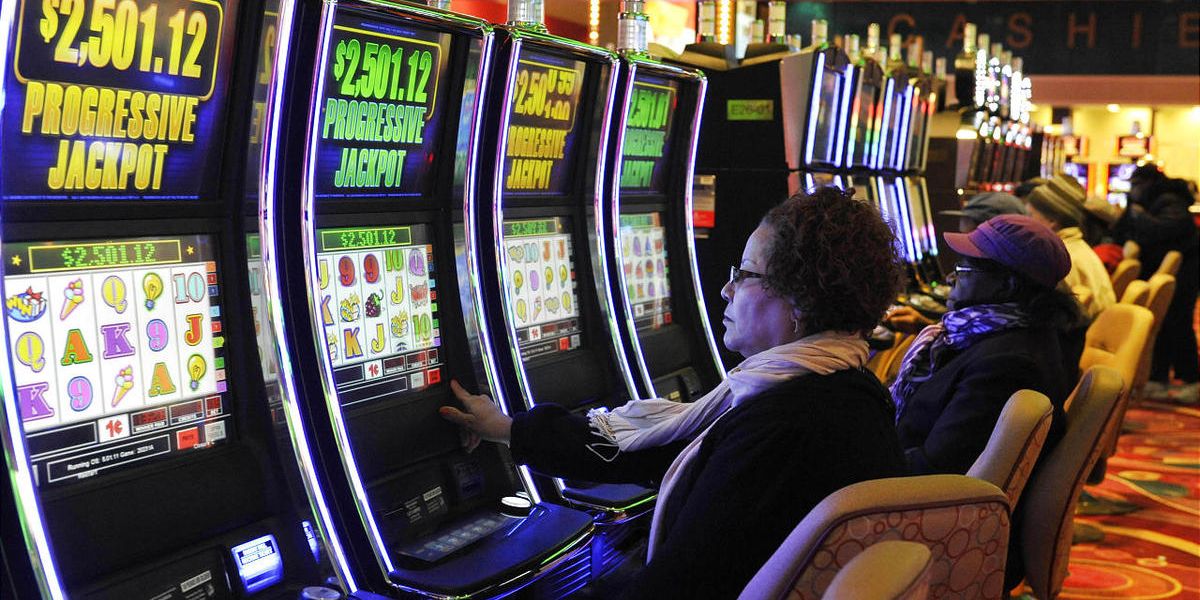
Progressive jackpot slots add an additional wrinkle. A portion of every wager supplies the growing jackpot pool, which means the base game RTP is often reduced than a standard slot. The overall theoretical return might still be attractive, but the player gives up regular payouts for a chance at the top prize. At Loonie Gold Casino, the progressive jackpot selection offers titles where the pooled prize has achieved substantial sums, and the displayed RTP always indicates the full game cycle including the jackpot contribution.
Payment Methods and Their Effect on Your Balance
Deposit management might seem separate to the house edge, but charges and conversion costs eat into a bankroll the same way a higher edge does. A player who adds $100 and forfeits 3% to a currency conversion fee has effectively conceded a 3% edge before putting a single bet. Canadian players using Interac e‑Transfer typically sidestep these costs entirely, as transactions process in Canadian dollars with no conversion required. The money lands in the casino account at full value, ready to deploy against the lowest‑edge games available.
Payout time also affects the practical return on play. A casino that processes payouts within 24 hours for Interac users delivers winnings to the player’s bank account quickly, where the money can earn interest or be used for other purposes. Slow withdrawals that take five to seven business days produce an opportunity cost. Loonie Gold Casino has arranged its payment operations to emphasize fast processing for Canadian banking methods, including Interac and select digital wallets prevalent in the Ontario and British Columbia markets.
Cryptocurrency deposits introduce a different set of considerations. Bitcoin and Ethereum transactions bypass traditional banking rails, often coming in minutes with minimal network fees. However, the exchange rate between the cryptocurrency and the Canadian dollar varies constantly. A player who transfers Bitcoin worth $200 might find it worth $195 or $205 by the time the transaction settles. That volatility acts like an additional house edge, though it can work in the player’s favour as often as not.